Best Privacy Fence Options for Texas Gulf Coast Homes
Built to Withstand High Winds, Humidity, and Salt Air
For homeowners along the Texas Gulf Coast, a privacy fence needs to do more than block the view into a backyard. It should provide reliable security, complement the home, create a comfortable outdoor space, and stand up to the heat, humidity, rain, wind, and coastal conditions common around Texas City.
For most Gulf Coast homeowners, wood and vinyl are two of the best privacy fence options. Wood offers a traditional appearance, extensive customization, and strong value, while vinyl provides excellent privacy with lower routine maintenance. The right choice depends on your budget, preferred appearance, property layout, and how much maintenance you want to handle over the life of the fence.
Whether you live in Texas City, League City, Friendswood, Dickinson, Clear Lake, Kemah, or another nearby community, comparing these factors before installation can help you choose a privacy fence that works for your property for years to come.
Why Install a Privacy Fence?
Privacy is the obvious reason for installing a privacy fence, but a well-designed fence can provide several benefits at the same time.
A solid backyard fence can help create separation between neighboring properties, reduce visual distractions, provide a defined outdoor area for children and pets, and make patios or decks feel more secluded.
Privacy fencing can be particularly useful when homes are located relatively close together. Instead of feeling exposed whenever you step onto your patio or into your backyard, a solid fence creates a clearly defined personal outdoor space.
Homeowners may consider privacy fencing for:
- Backyard entertaining areas
- Swimming pools
- Patios and decks
- Pet areas
- Children's play spaces
- Outdoor kitchens
- Gardens
- Properties next to busy streets
A privacy fence can also make landscaping easier to design by providing a consistent backdrop for shrubs, flower beds, lighting, and other outdoor features.
What Makes a Good Privacy Fence on the Texas Gulf Coast?
Not every privacy fence performs equally well in coastal Texas. The Gulf Coast environment should influence both the material you select and how the fence is constructed.
High humidity can contribute to moisture-related problems in wood. Strong sunlight can affect finishes and surfaces. Storms and high winds place additional pressure on posts and panels. Properties closer to Galveston Bay may also experience greater exposure to salty coastal air.
A good Gulf Coast privacy fence should therefore combine several qualities:
- Strong, properly installed posts
- Materials appropriate for outdoor moisture exposure
- Quality fasteners and hardware
- A design suitable for the property's wind exposure
- Appropriate drainage around the fence line
- Reasonable maintenance requirements
Installation quality matters just as much as the material itself. A premium fence installed poorly may experience problems sooner than a more modest fence installed correctly.
Wood Privacy Fencing: A Classic Texas Choice
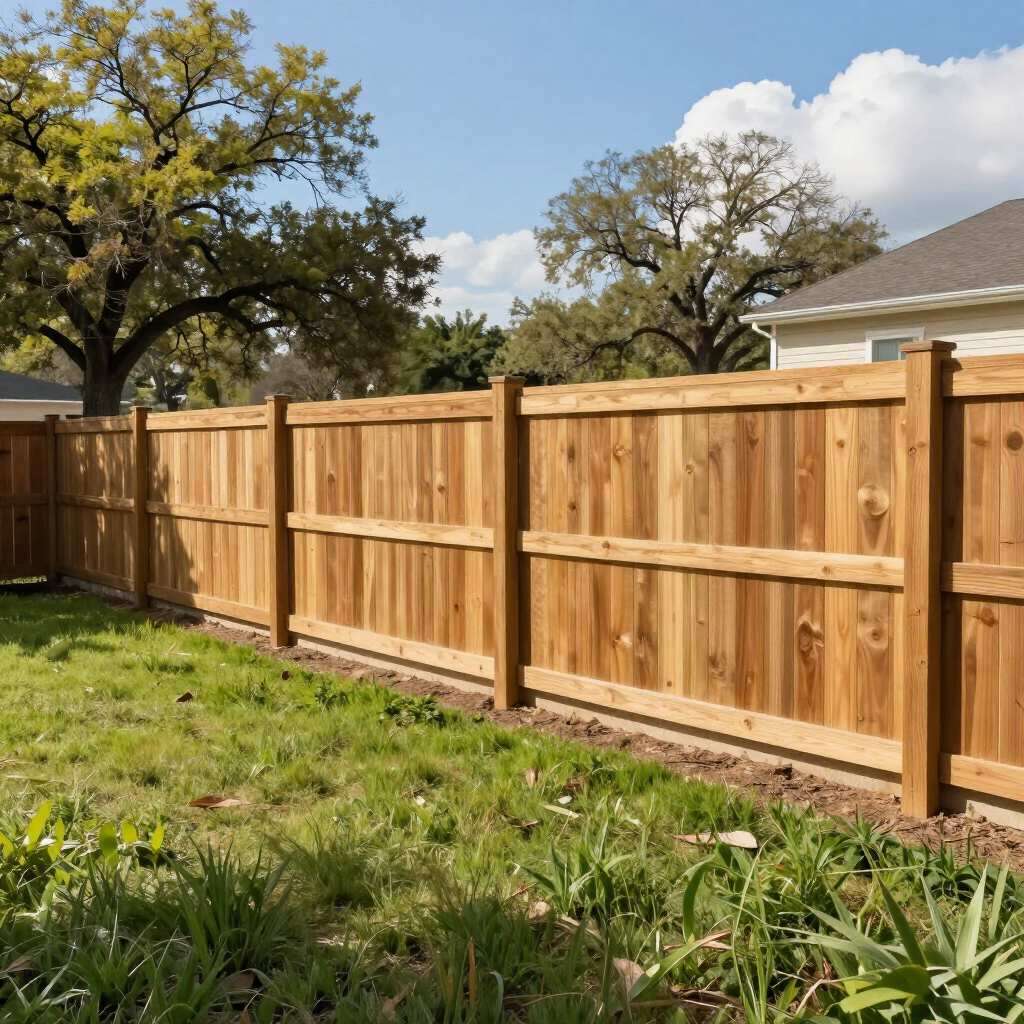
Wood remains one of the most recognizable privacy fence materials in Texas. A traditional wood fence works well with many home styles and provides nearly complete visual separation when boards are installed appropriately.
One major advantage of wood is flexibility. It can be adapted to different fence heights, board arrangements, gates, decorative details, and property layouts.
Homeowners may choose designs such as:
- Traditional vertical privacy boards
- Board-on-board fencing
- Horizontal wood fencing
- Shadowbox designs
- Decorative top treatments
This variety allows homeowners to build a fence that feels like part of the property's overall design rather than simply a boundary.
Wood is also relatively straightforward to repair. If a limited number of boards become damaged, those components can often be replaced without rebuilding an entire fence section.
[Residential Fencing Services]
What Are the Advantages of a Wood Privacy Fence?
For many homeowners, the biggest advantages of wood are appearance, customization, and value.
Wood has a natural texture that works well with traditional homes, modern properties, gardens, decks, and heavily landscaped yards. Stains can also be used to create different colors and finishes.
Wood fencing can provide excellent privacy when boards are positioned with minimal gaps. A six-foot privacy fence, where permitted, can substantially reduce sightlines between neighboring backyards.
Another benefit is design flexibility. Gates, transitions, decorative caps, and other details can be incorporated into a wood fence to suit the property's layout.
For homeowners searching for a privacy fence near me because they want a familiar, versatile solution, wood is often one of the first materials worth considering.
What Maintenance Does a Wood Privacy Fence Need?
Wood requires more maintenance than vinyl. That does not make it a poor choice, but homeowners should understand the upkeep before selecting it.
The Gulf Coast's combination of moisture, sun, and storms means a wood fence should be inspected periodically. Look for loose boards, deteriorating fasteners, leaning posts, and early signs of decay.
Depending on the lumber and finish, staining or sealing may also be appropriate to help manage moisture exposure and maintain the desired appearance.
Vegetation should not be allowed to grow heavily against the fence. Dense vines, shrubs, and accumulated debris can hold moisture against wood for extended periods.
After major storms, check the fence for movement or damage. Addressing one loose board or unstable post early can help prevent a minor problem from spreading to adjoining sections.
Vinyl Privacy Fencing: A Lower-Maintenance Alternative
Vinyl is another strong option for homeowners who want substantial privacy without the routine staining or sealing associated with wood.
Vinyl privacy fences typically use solid or closely fitted panels to create a clean, consistent barrier. Because vinyl does not absorb water like wood, it is resistant to rot and does not need to be painted or stained.
That can make it appealing for homeowners in humid communities such as Clear Lake, Kemah, League City, and Texas City.
Routine maintenance is generally straightforward. Dirt, pollen, or surface buildup can often be removed with water and an appropriate mild cleaner.
Vinyl also provides a consistent appearance. Homeowners who prefer clean lines and uniform panels may favor it over the natural variation found in wood.
Wood vs. Vinyl Privacy Fence: Which Is Better?
Neither material is automatically right for every home.
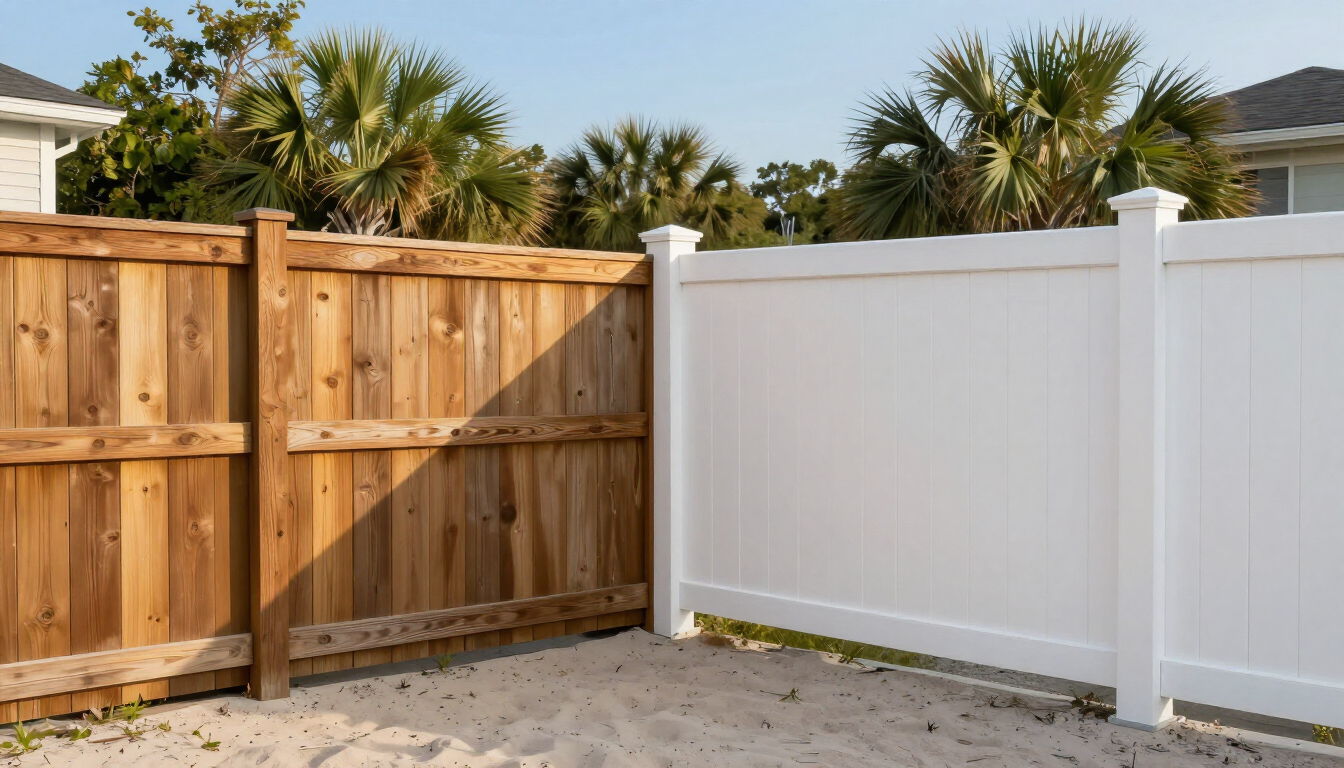
If you prioritize a natural appearance, customization, and potentially lower initial material costs, wood may be the better fit. If you prioritize lower routine maintenance, resistance to rot, and a uniform appearance, vinyl may be worth the higher upfront investment.
Here is a simple comparison:
| Factor | Wood Privacy Fence | Vinyl Privacy Fence |
|---|---|---|
| Privacy | Excellent | Excellent |
| Appearance | Natural, customizable | Clean, uniform |
| Routine maintenance | Higher | Lower |
| Rot resistance | Depends on material and care | Excellent |
| Customization | Extensive | Moderate |
| Coastal suitability | Good with proper material and care | Very good |
| Individual component repairs | Often straightforward | Depends on fence system |
The best decision should be based on the specific property rather than material alone. Wind exposure, drainage, HOA restrictions, desired fence height, gate locations, and budget all matter.
What About Chain Link for Backyard Privacy?
Chain link fencing is durable, practical, and cost-effective, but a standard chain link fence does not provide the same level of visual privacy as wood or vinyl.
Privacy slats or screening can reduce visibility through chain link, making it a potential option for homeowners who want a combination of enclosure and partial screening.
However, if maximum backyard privacy is the primary objective, solid wood or vinyl fencing will generally provide a more complete visual barrier.
Chain link remains particularly useful for pet containment, larger properties, utility areas, and situations where visibility through the fence is desirable.
How Tall Should a Privacy Fence Be?
Six feet is a common residential privacy fence height, but homeowners should not assume that a six-foot fence is automatically permitted everywhere on a property.
Fence height requirements can depend on:
- Whether the fence is in a front, side, or rear yard
- Local municipal rules
- Corner-lot visibility requirements
- Easements
- HOA or deed restrictions
- Pool barrier requirements, when applicable
Rules can vary between Texas City, League City, Friendswood, and other municipalities.
Before installation, homeowners should confirm the rules applicable to their specific address and neighborhood. This is particularly important if the desired fence is unusually tall or positioned near a street.
Don't Forget About Gates
A privacy fence is only as functional as its access points.
Gate placement should be considered during the planning stage rather than treated as an afterthought. Think about how lawn equipment, trash containers, bicycles, patio furniture, and other large items will enter or leave the yard.
Some properties benefit from a standard pedestrian gate plus a wider double gate.
Gate posts and hardware also need to handle repeated movement. Coastal humidity and weather exposure make quality hinges, latches, fasteners, and proper structural support especially important.
Gulf Coast Fence also works with custom gates, allowing homeowners to coordinate access points with the rest of their fencing project.
Privacy Fencing for Pools, Patios, and Decks
Privacy fencing can be particularly valuable around outdoor living spaces.
A deck or patio that is visible from neighboring properties may feel much more comfortable once sightlines are reduced. Homeowners can then create an outdoor dining area, lounge, or entertaining space with greater separation.
Pool areas require additional consideration because swimming pool barriers may be subject to specific safety requirements. Privacy alone is not enough; homeowners should verify applicable barrier, gate, and latch rules for their property.
For a patio or deck, the fence should also be planned alongside landscaping and access routes. A thoughtful layout can create privacy without making the yard feel unnecessarily confined.
How Can You Make a Privacy Fence Last Longer?
Longevity begins with proper construction.
Fence posts should be appropriately positioned and secured for the site's conditions. Materials should be suitable for the environment, and hardware should be selected with outdoor exposure in mind.
Homeowners can then support the fence's longevity with routine maintenance:
- Inspect the fence after major storms.
- Address loose boards or panels promptly.
- Keep soil and mulch from accumulating excessively against wood.
- Trim vegetation that traps moisture against the fence.
- Keep gates properly aligned.
- Follow appropriate cleaning and finishing recommendations for the selected material.
A few minutes of periodic inspection can reveal developing problems before they become expensive repairs.
Frequently Asked Questions About Privacy Fencing
What is the best fence for backyard privacy in Texas?
Wood and vinyl are two of the strongest options for full backyard privacy. Wood offers a natural, customizable appearance, while vinyl provides a solid visual barrier with lower routine maintenance. The best option depends on budget, design preferences, property conditions, and local restrictions.
Is wood or vinyl better near the Texas coast?
Both can work well when properly installed. Vinyl offers strong resistance to moisture and rot, while properly selected and maintained wood provides excellent privacy and design flexibility. Properties with substantial wind or salt exposure should be evaluated individually before choosing a system.
How high should my privacy fence be?
Six feet is a common height for residential privacy fences, but local ordinances, HOA requirements, easements, and the fence's position on the property can affect what is permitted. Verify the rules for your specific property before installation.
Can a privacy fence help keep dogs in my yard?
Yes. Solid wood and vinyl fences can provide effective pet containment when the fence height, gate design, and ground clearance are appropriate for the dog. Dogs that dig or jump may require additional planning.
Is a privacy fence worth installing before building a deck or patio?
Planning the projects together can be beneficial. Fence placement can affect views, access, shade, landscaping, and how enclosed an outdoor living area feels. Coordinating the layout before construction can produce a more cohesive backyard.
Find the Right Privacy Fence for Your Gulf Coast Property
A privacy fence should make your backyard more comfortable without creating unnecessary maintenance problems. For Texas Gulf Coast properties, that means considering much more than appearance. Material durability, post installation, drainage, wind exposure, hardware, local regulations, and long-term maintenance all deserve attention.
Gulf Coast Fence is a family-owned and operated fencing contractor based in Texas City, serving homeowners throughout Texas City, La Porte, Deer Park, Pasadena, League City, Friendswood, Clear Lake, Kemah, Santa Fe, Dickinson, Hitchcock, Tiki Island, and the greater Gulf Coast region.
Whether you're comparing a traditional wood privacy fence with a lower-maintenance vinyl system or need help determining the right layout for your backyard, professional planning can help you make a more informed investment.
Explore fencing options and request information from Gulf Coast Fence at
www.gulfcoastfence.com or contact the team at
(409) 795-0084.
Recent Posts