How to Choose the Right Security Fence for a Commercial Property
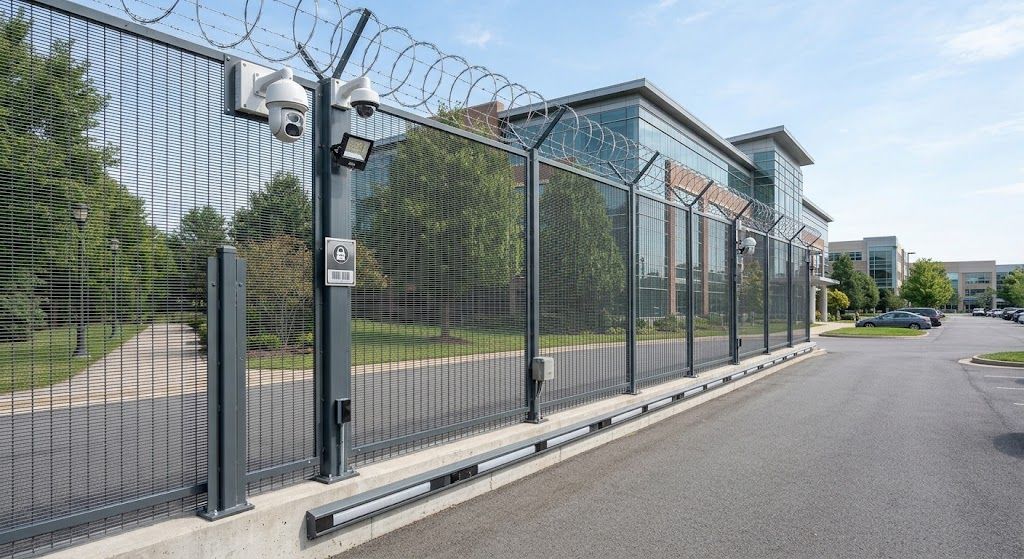
A commercial security fence should match the specific risks, access needs, visibility requirements, and daily operations of the property it protects. For businesses in Texas City and the surrounding Gulf Coast region, the fence also needs to handle humidity, rain, salt exposure, strong winds, and frequent gate use.
For many warehouses, industrial facilities, equipment yards, and similar properties, chain link fencing offers a practical combination of security, visibility, durability, and cost control. Other businesses may benefit from aluminum, ornamental fencing, privacy fencing, or a combination of different fence systems.
The best solution starts with understanding what the fence actually needs to accomplish.
Why Commercial Security Fencing Requires Careful Planning
Residential fences are often selected primarily for privacy, pets, appearance, or property boundaries. Commercial security fencing can have a broader role.
A business may need fencing to protect equipment, control access to restricted areas, separate customers from operational zones, establish property boundaries, or create a visible first layer of security around a facility.
Gulf Coast Fence provides commercial fencing for properties such as warehouses, industrial facilities, construction sites, apartment communities, schools, retail properties, office buildings, and municipal facilities in the Texas City area.
That variety matters because there is no universal commercial security fence.
A retail property with customer traffic has different requirements from an industrial yard containing valuable equipment. An apartment community may prioritize appearance and controlled pedestrian access, while a warehouse may place greater emphasis on perimeter protection and vehicle gates.
Before selecting a material, ask one fundamental question:
What are we trying to prevent, control, or protect?
The answer should guide the rest of the project.
Start With a Commercial Property Security Assessment
Before deciding whether you need chain link, aluminum, privacy fencing, or another system, evaluate the property itself.
Walk the perimeter and identify potential vulnerabilities.
Important questions include:
- Where can vehicles enter?
- Where do employees enter?
- Are there areas customers should not access?
- Is valuable equipment stored outdoors?
- Are dumpsters, utilities, generators, or inventory exposed?
- Are there sections of the property hidden from view?
- Does the site need visibility from the street?
- Are there existing gates that frequently malfunction?
- Are neighboring properties easily accessible?
- Which areas require access after normal business hours?
This approach is consistent with the broader concept of layered physical security. The U.S. Cybersecurity and Infrastructure Security Agency describes security-in-depth as using outer, middle, and inner security layers, with fences and gates potentially forming part of the outer perimeter.
A fence should therefore be considered part of the property's overall security plan rather than an isolated feature.
Chain Link Fencing for Commercial Security
Chain link is one of the most practical commercial fencing materials available, particularly for businesses that need to secure large areas.
It provides a clear physical boundary while maintaining visibility through the fence. This can be valuable for warehouses, equipment yards, industrial properties, construction sites, and utility areas.
Gulf Coast Fence specifically identifies chain link fencing as a common option for commercial properties around Texas City, including industrial facilities, warehouses, storage yards, construction sites, and utility areas.
Why do businesses choose chain link?
Chain link offers several advantages:
- Cost-effective coverage for large perimeters
- Good visibility through the fence
- Durable construction
- Relatively low maintenance
- Flexible gate configurations
- Clear property-line definition
- Suitability for many industrial environments
Visibility can be an important security feature.
Employees, security personnel, or cameras may be able to see activity on the opposite side of an open fence more easily than they could through a solid privacy fence.
However, visibility is not always desirable. A company storing valuable materials outdoors may prefer to reduce views into certain parts of its property.
In those cases, a combination of fencing types or screening strategies may be more appropriate.
When Does Privacy Fencing Make Sense for a Business?
Commercial privacy fencing can be useful when a company needs to shield operational areas from customers, neighboring properties, or public streets.
Examples may include:
- Dumpster enclosures
- Equipment areas
- Employee-only spaces
- Outdoor storage
- Service yards
- Maintenance areas
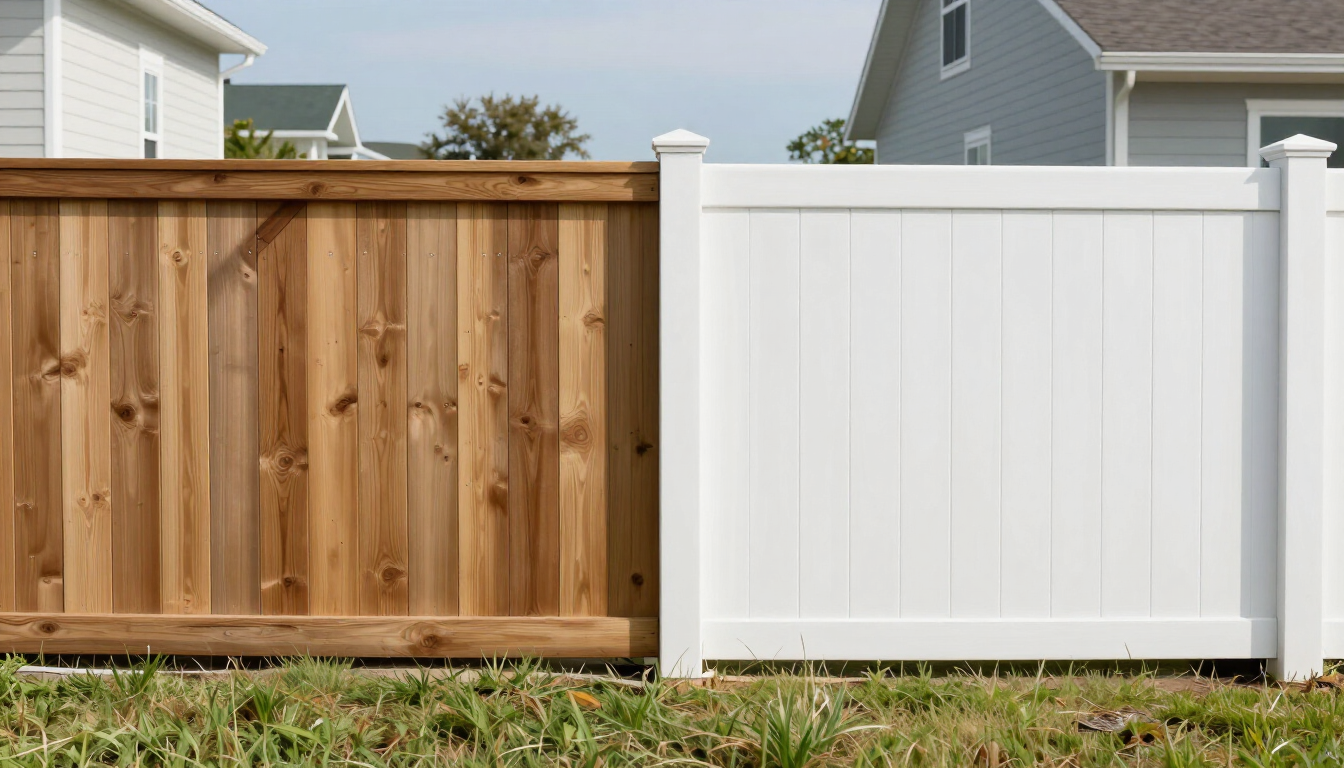
Wood or vinyl privacy fencing may be appropriate depending on the property's needs and applicable requirements.
A privacy fence can also improve the appearance of a commercial property by screening areas that are necessary for operations but visually unattractive.
However, complete visual screening is not automatically better for security. A solid fence may create concealed spaces on either side of the barrier.
That is why fence design should be based on the specific site rather than a simple assumption that taller and more private always means more secure.
Aluminum and Ornamental Fencing for Customer-Facing Properties
Some businesses need security without creating an industrial appearance.
Aluminum or ornamental-style fencing can provide a defined perimeter while maintaining an attractive, professional exterior.
This can make these fence styles suitable for properties such as:
- Offices
- Apartment communities
- Schools
- Professional facilities
- Retail environments
- Certain hospitality properties
Open metal fencing maintains visibility and can complement landscaping and architecture.
For businesses where curb appeal matters, the fence should be treated as part of the exterior design. Customers may see the perimeter before they ever enter the building.
A professionally installed fence can communicate that the property is organized and maintained while still providing a functional boundary.
Commercial Gates Are a Critical Part of the Security System
A commercial fence can be strong along hundreds of feet of perimeter and still fail to meet the property's needs if the gate is poorly planned.
Access points deserve careful consideration because they are where employees, customers, contractors, deliveries, and vehicles move through the perimeter.
Gulf Coast Fence installs commercial vehicle access gates, security gates for restricted areas, and walk gates for employee access. The company emphasizes reinforced support, secure hardware, and alignment for gates exposed to frequent use.
Before installing a commercial gate, consider:
- Who needs access?
- What types of vehicles use the entrance?
- How frequently will the gate operate?
- Does the opening need to accommodate delivery trucks?
- Is pedestrian access separate from vehicle access?
- Where will vehicles wait while entering?
- Will the gate interfere with traffic flow?
- How will the property be secured outside business hours?
A gate used twice a day has very different demands from one used by dozens of delivery vehicles.
Frequent operation makes post stability, hinges, latches, alignment, and hardware especially important.
Don't Overlook Employee and Pedestrian Access
Vehicle gates often receive most of the attention during commercial fence planning, but pedestrian access can be just as important.
Employees should not have to use an inconvenient or unsafe route simply because the fence layout was designed entirely around vehicles.
A well-planned perimeter may include dedicated walk gates positioned near:
- Employee parking
- Main buildings
- Break areas
- Service areas
- Public sidewalks
Reducing unnecessary access points can simplify perimeter control, but a business still needs enough appropriately positioned entrances to operate efficiently.
Security should support business operations rather than creating avoidable daily obstacles.
How Gulf Coast Weather Affects Commercial Fencing
Commercial fencing in Texas City faces environmental conditions that businesses farther inland may not experience to the same degree.
Gulf Coast Fence notes that local commercial fences may be exposed to high humidity, salt air, heavy rainfall, and strong winds.
These conditions make material selection and installation quality particularly important.
Metal components may require appropriate corrosion resistance. Posts must provide reliable structural support. Gates need hardware capable of handling both frequent operation and outdoor exposure.
Drainage should also be considered.
Repeated heavy rainfall can affect soil conditions around posts, particularly if water consistently collects along the fence line.
After major storms, property managers should inspect commercial fences for:
- Leaning posts
- Loose sections
- Damaged mesh
- Bent components
- Gate misalignment
- Corroded hardware
- Storm debris
- Washout near posts
Small problems should be addressed before they affect a larger portion of the perimeter.
Security Fence Design Should Consider Visibility
Visibility is one of the most important decisions in commercial fence design.
Some businesses benefit from an open perimeter because employees, cameras, and passersby can see what is happening around the property.
Other businesses need privacy because equipment, materials, vehicles, or operational activities should not be easily visible from outside.
The right approach may even vary within the same property.
For example, a business could use open chain link fencing along a long perimeter while installing privacy fencing around a specific equipment or service area.
Instead of asking whether an open or solid fence is universally more secure, ask:
Where does this property benefit from visibility, and where does it benefit from screening?
That question often leads to a more practical design.
How High Should a Commercial Security Fence Be?
There is no single correct height for every commercial fence.
Appropriate height depends on the property's security objectives, fence location, local requirements, visibility needs, and type of business.
A taller fence may provide a stronger physical barrier, but height alone does not create an effective security system.
A business also needs to consider:
- Gate security
- Fence condition
- Nearby objects that could aid climbing
- Lighting
- Cameras
- Access procedures
- Landscaping
- Building security
Before selecting fence height, property owners should verify zoning, permitting, visibility, easement, and other requirements that apply to their address.
Industrial and commercial properties may be subject to different standards from nearby residential lots.
Plan Around Utilities, Easements, and Property Lines
One of the easiest ways to create problems during a commercial fencing project is to plan the fence without considering what lies beneath or around it.
Commercial properties may contain:
- Underground utilities
- Drainage infrastructure
- Fire access routes
- Utility easements
- Shared driveways
- Loading areas
- Property-line complications
A current property survey can help identify boundaries and relevant features.
Underground utilities should also be properly located before digging begins.
For larger commercial properties, careful planning at the start can prevent expensive changes later in the project.
Repair an Existing Security Fence or Replace It?
Not every damaged commercial fence requires complete replacement.
Repair may make sense when damage is isolated and the majority of the fence remains structurally sound.
Examples can include:
- A damaged chain-link section
- A leaning post
- A gate that has fallen out of alignment
- Localized storm damage
- Loose hardware
Replacement becomes more attractive when problems are widespread, the existing fence no longer meets security requirements, or repeated repairs are becoming a regular operating expense.
Gulf Coast Fence provides commercial fence repair for damaged sections, leaning posts, and gate problems as well as new installations.
A professional inspection can help determine whether repairing the current system or investing in replacement offers better long-term value.
Questions to Ask Before Installing a Commercial Security Fence
Before requesting estimates, businesses should develop a clear list of requirements.
Ask:
- What assets are we protecting?
- Do we need visual privacy?
- How many vehicle gates are required?
- Do employees need separate pedestrian gates?
- What fence material fits the site's appearance?
- How frequently will gates be used?
- Are there drainage issues?
- Are there HOA, zoning, or municipal restrictions?
- Is the existing fence repairable?
- How will the project affect normal business operations?
Providing this information to a fence contractor makes it easier to develop an appropriate recommendation rather than relying on a one-size-fits-all design.
Frequently Asked Questions About Commercial Security Fencing
What type of fence is best for commercial security?
Chain link is a strong option for many warehouses, industrial properties, storage yards, and other commercial sites because it combines perimeter definition, visibility, durability, and cost efficiency. Aluminum, ornamental, wood, or vinyl may be more appropriate when appearance or privacy is a greater priority.
Is chain link fencing suitable for an industrial property?
Yes. Chain link is commonly used around industrial facilities because it can efficiently enclose large areas while maintaining visibility. The appropriate height, mesh, gates, and other specifications should be based on the property's security requirements.
How important are gates in commercial fencing?
Extremely important. Gates determine how people and vehicles move through the perimeter and typically experience more mechanical use than stationary fence sections. Gate width, support, hardware, alignment, and placement should all be planned around actual operations.
Should a business choose an open or privacy fence?
It depends on the property. Open fencing maintains visibility, while privacy fencing can screen equipment, service areas, or other operations. Some commercial sites benefit from using different fence styles in different areas.
Can Gulf Coast weather damage commercial fencing?
Yes. Humidity, salt exposure, heavy rain, wind, and storms can affect fences and gates over time. Selecting suitable materials, installing them correctly, and inspecting the perimeter after severe weather can help improve long-term performance.
Plan a Commercial Security Fence Around Your Business
The best commercial security fence is not necessarily the tallest, heaviest, or most expensive option. It is the system that supports the property's actual security requirements while allowing employees, vehicles, customers, and deliveries to move efficiently.
For some businesses, that means a chain link perimeter with carefully positioned vehicle and pedestrian gates. For others, it may mean ornamental fencing around customer-facing areas and privacy fencing around equipment or service zones.
The key is to evaluate the property as a complete system.
Gulf Coast Fence is a family-owned and operated fence contractor based in Texas City. The company provides commercial fencing, chain link fencing, gate installation, and fence repair for businesses throughout Texas City, Galveston County, and surrounding Gulf Coast communities.
Businesses searching for a commercial fence contractor near me in Texas City, League City, Deer Park, Pasadena, Clear Lake, Galveston, La Porte, or nearby areas can discuss their security requirements directly with Gulf Coast Fence.
To discuss commercial fencing, perimeter security, gates, or repairs, contact Gulf Coast Fence at (409) 795-0084 or visit the company website to request an estimate.
Recent Posts