What Is the Best Fence for Dogs? A Guide for Texas Homeowners
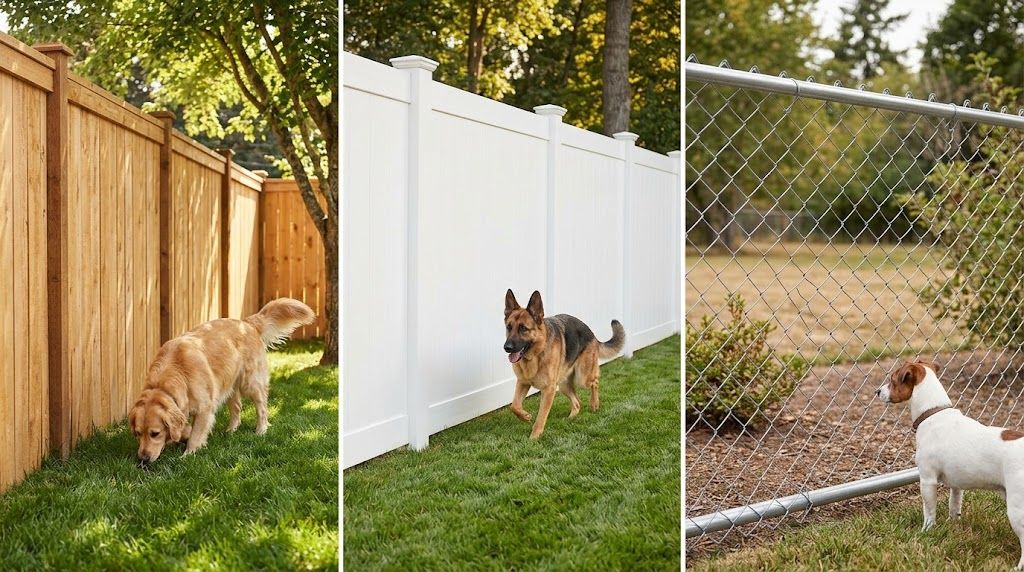
For most Texas homeowners, the best fence for dogs is one that matches the dog's size, behavior, and activity level while providing secure gates and minimal escape points. Wood privacy fencing is an excellent option for dogs that bark at visual distractions or need a secure backyard, while vinyl offers similar visual privacy with lower routine maintenance. Chain link can be a practical, economical solution for dogs that do not climb or react strongly to people and animals outside the yard.
There is no single fence that works for every dog. A small companion dog has different containment needs than a large, athletic breed, and a dog that likes to dig presents different challenges than one that jumps.
For homeowners in Texas City and communities throughout the Gulf Coast, the climate adds another consideration. A backyard fence must not only contain the dog—it also needs to withstand humidity, heavy rain, strong sunlight, and coastal storms.
Here is what to consider when choosing a fence that keeps your dog safer while also improving the privacy, appearance, and functionality of your property.
What Should You Look for in a Dog-Friendly Fence?
A good dog fence has one primary job: creating a secure physical boundary.
However, effective pet containment depends on more than simply putting a barrier around the yard. Fence height, gaps between boards or pickets, clearance beneath the fence, gate design, and the dog's individual behavior all matter.
Before choosing a fence, consider:
- Your dog's adult size
- Whether your dog jumps or climbs
- Whether your dog digs
- How the dog reacts to people or animals outside the yard
- The amount of privacy you want
- Your maintenance preferences
- Your property's layout
- Gate locations and security
- Local or HOA fence restrictions
If you have multiple dogs, plan around the dog with the greatest containment needs.
For example, a four-foot fence might contain a small, calm dog but be unsuitable for a large dog capable of jumping significantly higher. Similarly, a fence with decorative openings may look attractive but create potential escape points for a very small dog.
Wood Privacy Fencing for Dogs
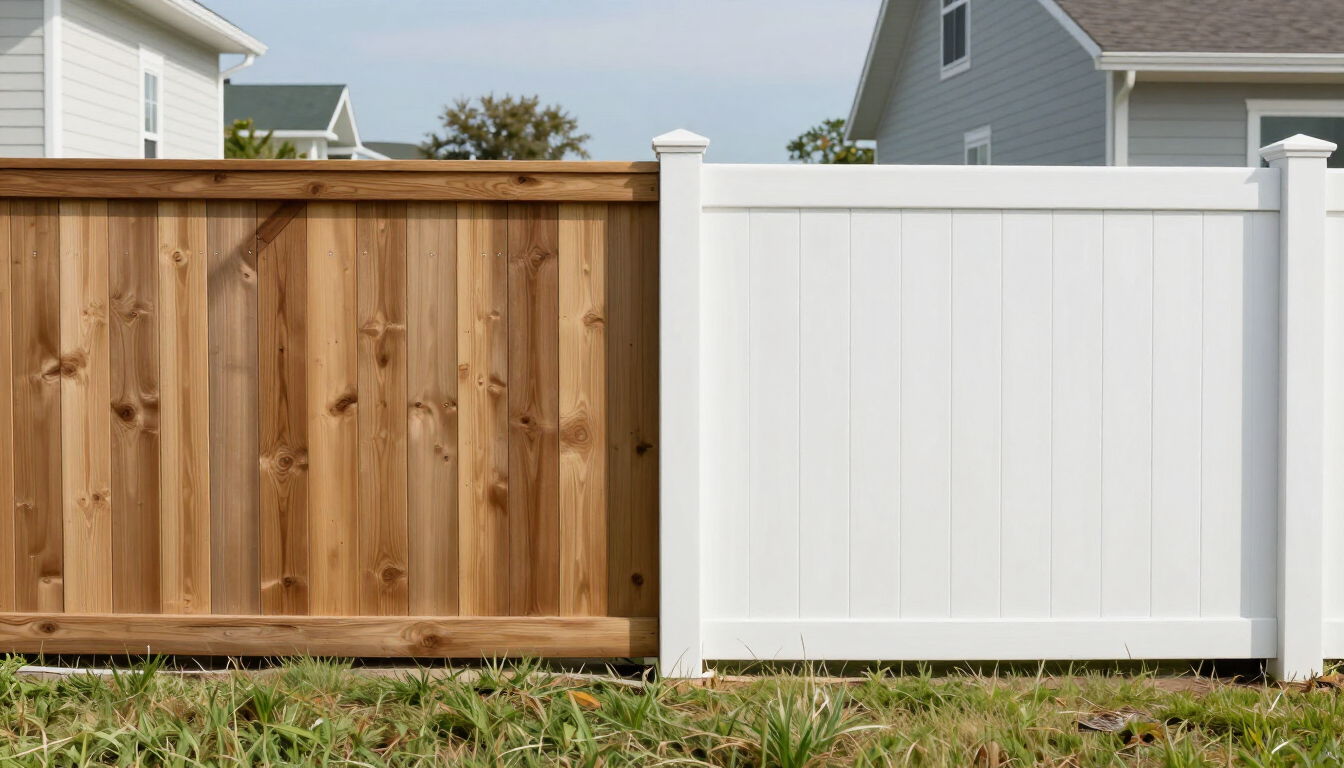
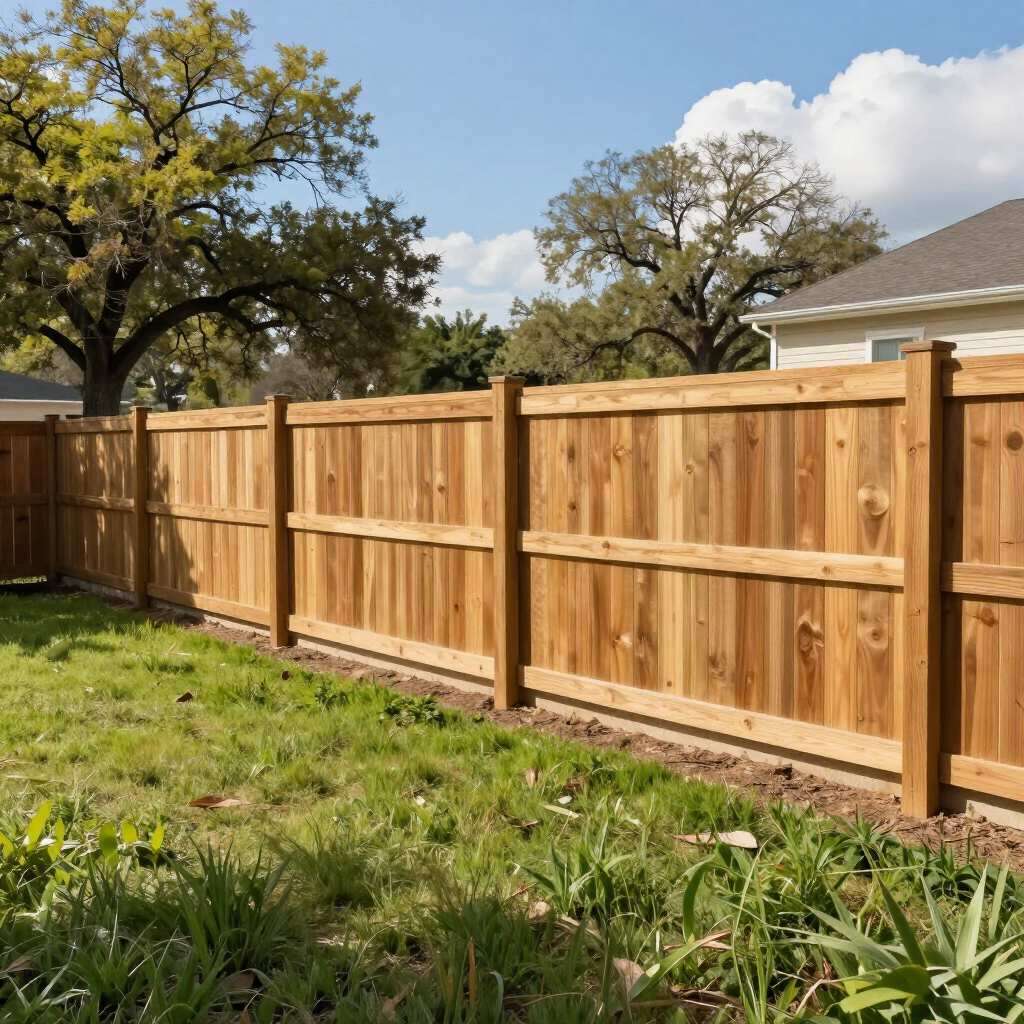
Wood privacy fencing is one of the most popular options for dog owners because it combines physical containment with visual screening.
Unlike an open fence, a solid privacy fence prevents most dogs from seeing every pedestrian, bicycle, dog, or vehicle passing the property.
That can be useful for dogs that become excited or reactive when they see activity outside the yard.
A typical wood privacy fence also offers relatively few horizontal or open elements that a dog can use to squeeze through.
Other benefits include:
- Strong visual privacy
- Customizable height
- Flexible gate placement
- Traditional residential appearance
- Ability to replace individual damaged boards
For homeowners who want their fence to serve both as a pet barrier and a backyard privacy feature, wood can provide a strong combination of benefits.
Is a Wood Fence Good for Large Dogs?
A properly designed wood privacy fence can work very well for larger dogs, particularly when sufficient height is permitted.
Large and athletic dogs may require a taller barrier than smaller pets. Owners should consider the dog's jumping ability rather than selecting a fence based solely on its current height.
Fence condition is equally important.
A loose board may not be a major issue for a yard without pets, but an energetic dog can turn a small weakness into an escape route. Posts, rails, boards, gates, and fasteners should therefore be inspected periodically.
The bottom of the fence also deserves attention. Large gaps created by erosion or uneven terrain can provide enough space for a determined dog to push underneath.
Vinyl Privacy Fencing for Dogs
Vinyl privacy fencing provides many of the containment advantages of wood while offering lower routine maintenance.
Solid vinyl panels create a visual barrier that can help reduce distractions from neighboring properties and streets. Vinyl also does not splinter, which can be attractive to homeowners concerned about dogs rubbing against or playing near the fence.
Other advantages include:
- Strong privacy
- Smooth surfaces
- Resistance to rot
- No staining or painting
- Easy routine cleaning
Vinyl can be particularly appealing in humid Gulf Coast communities such as Texas City, League City, Clear Lake, and Kemah because it does not absorb moisture in the same manner as wood.
However, installation quality remains critical. Posts and panels need to be secured appropriately for the property and local conditions.
Is Chain Link Fencing Good for Dogs?
Chain link is another practical dog-fencing option and can be especially useful when affordability, visibility, and durability are priorities.
A chain link fence allows homeowners to see through the perimeter, which may be beneficial if you want to maintain an open feeling in the yard.
It also works well for many pet containment applications because the metal mesh creates a continuous physical barrier.
Chain link fencing may be a good fit for:
- Larger properties
- Dedicated dog runs
- Side yards
- Homeowners who do not need visual privacy
- Budget-conscious projects
However, visibility can be a disadvantage for dogs that react to outside activity. A dog that barks whenever another dog passes may remain more stimulated behind an open chain link fence than behind a solid privacy fence.
Some athletic dogs may also attempt to climb chain link mesh. The individual dog's behavior should therefore be considered before selecting this material.
How Tall Should a Fence Be for a Dog?
There is no universal height that works for every dog.
A fence for a small, low-energy breed may not need to be as tall as a fence designed for a large, athletic dog. Six-foot privacy fences are commonly used for residential yards and can provide a substantial barrier for many dogs, where that height is permitted.
However, fence height should be chosen according to:
- Dog size
- Jumping ability
- Breed tendencies
- Yard elevation
- Nearby objects the dog could use for leverage
A dog standing on a raised deck, landscaping wall, or outdoor furniture may effectively have a shorter barrier to overcome. The entire yard layout should therefore be considered.
Local ordinances and HOA restrictions may also limit fence height. Always confirm the applicable requirements before construction.
What Is the Best Fence for a Dog That Digs?
For digging dogs, the bottom of the fence is just as important as the top.
Dogs may dig because of boredom, prey drive, anxiety, curiosity, or simply because digging is rewarding. A fence should not be expected to solve the underlying behavior, but thoughtful design can reduce obvious escape opportunities.
Homeowners should pay attention to:
- Gaps beneath panels
- Areas where soil has eroded
- Loose ground near gates
- Fence lines next to gardens or soft soil
Regular inspections are particularly important after heavy Gulf Coast rain. Water movement can wash soil away and create new gaps beneath a fence that previously appeared secure.
If your dog routinely digs along the property boundary, discuss the issue with your fence contractor before installation so the fence layout can account for site-specific conditions.
Gates Are Often the Weakest Point
Homeowners sometimes focus so heavily on fence panels that they overlook the gate.
For dog containment, the gate deserves just as much attention as the rest of the fence.
A secure dog-friendly gate should:
- Close reliably
- Have appropriate ground clearance
- Use dependable hinges
- Include a secure latch
- Remain properly aligned
Sagging gates can create gaps at the bottom or sides. A latch that does not fully engage can also allow an energetic dog to push the gate open.
Households with children should consider whether the gate latch could accidentally be left open.
A wider driveway or equipment gate may require additional planning because larger gates place more stress on posts and hardware.
Choosing a Fence for Small Dogs
Small dogs present a different challenge because they may fit through openings that would never contain a larger pet.
Decorative fences with widely spaced pickets may therefore be inappropriate for certain small breeds.
Owners should examine:
- Space between fence elements
- Ground clearance
- Gate gaps
- Openings near posts
- Changes in ground elevation
A solid wood or vinyl privacy fence can eliminate many of these concerns because it has fewer open spaces.
Chain link can also work for many small dogs, provided the mesh dimensions and ground clearance are appropriate.
Choosing a Fence for Dogs That Bark at Neighbors
Some dogs are highly stimulated by visual activity.
If your dog runs along the fence barking whenever a neighbor enters the yard or someone walks past, a solid privacy fence may help reduce visual triggers.
Wood and vinyl are both strong options because they substantially restrict sightlines.
However, no fence guarantees that a dog will stop barking. Dogs can still hear and smell activity beyond the fence. Training, exercise, enrichment, and appropriate supervision remain important.
Think of a privacy fence as one component of a well-designed environment rather than a behavioral solution by itself.
Coastal Texas Weather Matters
A dog fence in Texas City needs to perform as an outdoor structure as well as a pet barrier.
The Gulf Coast exposes fences to:
- Humidity
- Heavy rainfall
- Strong sunlight
- Coastal air
- Tropical weather
- Strong winds
Wood fencing should use appropriate materials and receive suitable maintenance. Vinyl needs proper structural installation. Chain link components should be selected with corrosion resistance in mind.
Posts are particularly important because they support the entire system. A fence that begins leaning after repeated storms may develop openings or gate alignment problems that affect pet containment.
Inspect Your Dog Fence After Severe Weather
After a major storm, inspect the entire perimeter before allowing your dog to roam the yard unattended.
Look for:
- Loose boards
- Damaged panels
- Leaning posts
- Open gates
- Broken latches
- New gaps beneath the fence
- Fallen branches
- Damaged chain link mesh
Even when a fence appears normal from the house, damage may exist on the far side of the yard.
A quick perimeter inspection can identify escape points before your dog finds them.
Wood vs. Vinyl vs. Chain Link for Dogs
The right material ultimately depends on your property and priorities.
| Feature | Wood Privacy | Vinyl Privacy | Chain Link |
|---|---|---|---|
| Visual privacy | Excellent | Excellent | Low |
| Dog containment | Excellent when properly designed | Excellent when properly designed | Very good for suitable dogs |
| Routine maintenance | Moderate | Low | Low |
| Visual distractions | Blocks most views | Blocks most views | Allows visibility |
| Good for large yards | Good | Good | Excellent |
| Coastal suitability | Good with proper care | Very good | Good with suitable coating |
| Customization | Excellent | Good | Moderate |
Homeowners should avoid choosing solely on price. A less expensive fence that does not match your dog's behavior may be frustrating, while the most expensive material is unnecessary if a simpler system safely meets your needs.
Frequently Asked Questions About Fences for Dogs
What is the best backyard fence for dogs?
Wood and vinyl privacy fences are excellent choices for many dogs because they provide strong physical containment and block most outside visual distractions. Chain link can also work very well for dogs that do not climb and are comfortable seeing activity outside the yard.
Is a six-foot fence high enough for a large dog?
A six-foot fence can provide effective containment for many large dogs, but individual jumping and climbing ability varies. Homeowners should evaluate their dog's behavior and confirm that the desired fence height complies with local and HOA requirements.
Which fence is best for dogs that bark at people?
A solid wood or vinyl privacy fence may help because it reduces visual triggers. However, fencing alone may not resolve barking, and appropriate training and supervision should still be part of the solution.
Can dogs dig underneath a privacy fence?
Yes. Determined dogs may dig beneath almost any fence if suitable soil is available. Maintaining the ground along the fence line and inspecting for erosion or gaps can help reduce escape opportunities.
Should I repair an old fence before getting a dog?
Yes. Inspect an existing fence carefully before allowing a new dog to use the yard unattended. Loose boards, unstable posts, gaps, and faulty gate latches should be repaired first.
Create a Safer Backyard for Your Dog
The best fence for dogs is not simply the tallest or most expensive option. It is the fence that fits the dog's behavior, the property's layout, the homeowner's privacy preferences, and the environmental conditions where it will be installed.
For many Gulf Coast homes, wood privacy fencing provides an excellent combination of containment, visual screening, and customization. Vinyl offers similar privacy with lower routine maintenance, while chain link can provide durable and economical containment for suitable dogs and properties.
Whichever material you choose, pay close attention to gate security, ground clearance, fence condition, and installation quality. Those details can make the difference between a backyard that merely looks enclosed and one that functions as a dependable space for your pet.
Gulf Coast Fence is a family-owned and operated fence contractor based in Texas City, serving Texas City, La Porte, Deer Park, Pasadena, League City, Friendswood, Clear Lake, Kemah, Santa Fe, Dickinson, Hitchcock, Tiki Island, and communities throughout the greater Texas Gulf Coast region.
If you're searching for the best fence for dogs near me or want help comparing wood, vinyl, and chain link options for your property, Gulf Coast Fence can help you plan a fence around your household's needs.
Learn more at [Gulf Coast Fence] or contact Gulf Coast Fence at
(409) 795-0084 to discuss your fencing project.
Recent Posts