How to Choose the Right Fence for a Corner Lot
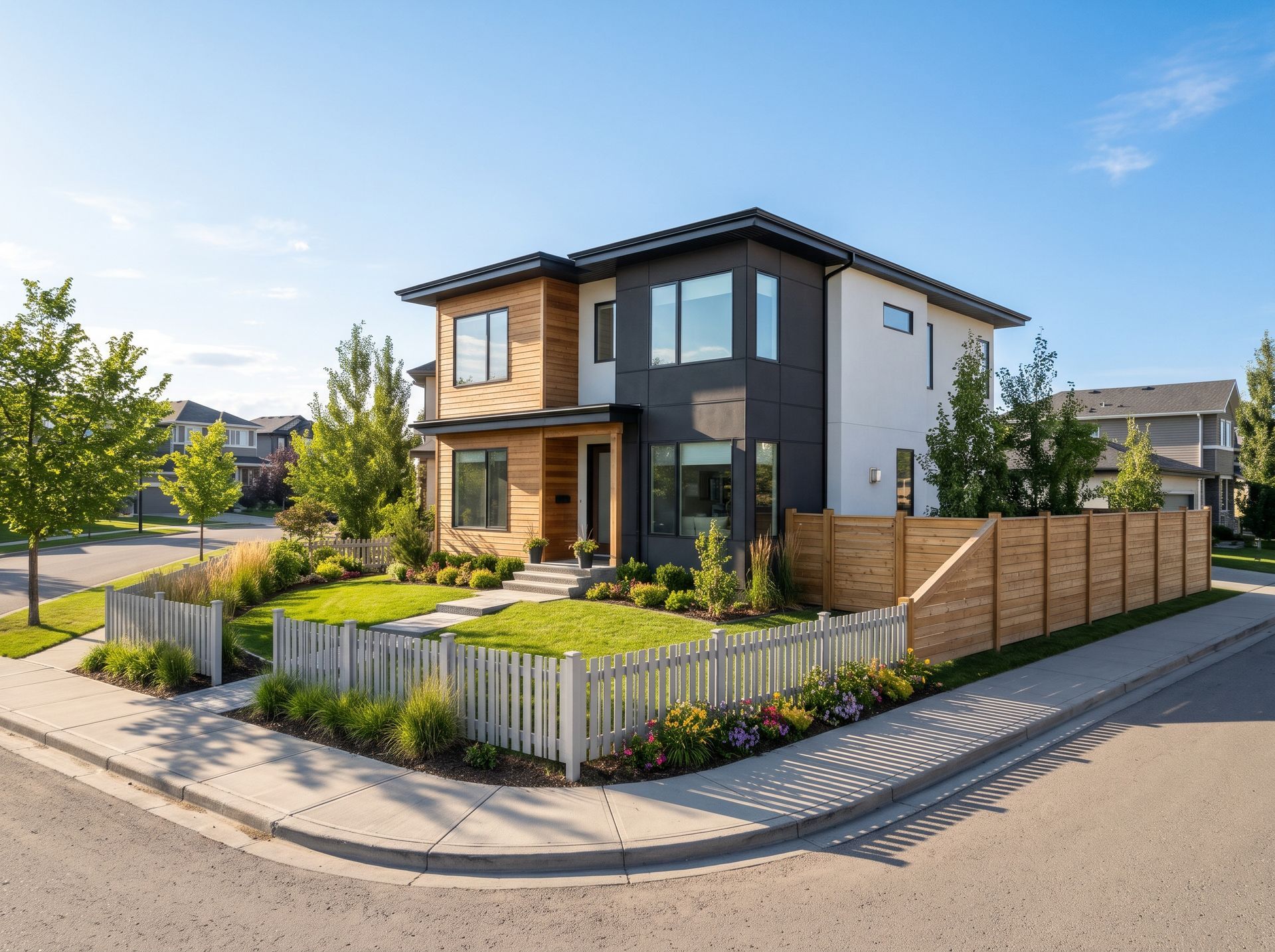
Choosing a fence for a corner lot requires more planning than fencing many interior residential properties. Because a corner home typically borders two streets, homeowners need to balance privacy and security with street visibility, curb appeal, property boundaries, gates, and any municipal or HOA requirements that apply.
For Texas Gulf Coast homeowners, weather is another important consideration. A corner fence may have significant exposure to wind, rain, humidity, and coastal conditions. The best design is therefore one that provides the privacy you want without compromising safe sightlines or overlooking the structural demands of the property.
Before selecting wood, vinyl, chain link, or aluminum, consider how every side of the property functions.
Why Is Fencing a Corner Lot Different?
An interior residential lot commonly has one street-facing side. A corner property usually has two.
That seemingly simple difference can affect nearly every part of a fence project.
A side yard that would be relatively private on an interior lot may be completely exposed to passing vehicles and pedestrians on a corner. Homeowners may therefore want additional screening along that side of the property.
At the same time, fences near intersections and driveways can affect visibility. A tall solid fence in the wrong location could make it harder for drivers, cyclists, or pedestrians to see one another.
Corner properties may also have more complicated relationships between front yards, side yards, building setbacks, easements, and public rights-of-way.
For these reasons, a corner lot fence should be planned specifically for the property instead of copying a fence design from an interior home nearby.
Start by Confirming Your Property Lines
Before deciding where a fence should go, confirm where your property actually ends.
This is especially important on a corner lot because landscaping, sidewalks, utility infrastructure, drainage areas, and other visible features may not correspond exactly with legal property boundaries.
Do not assume that the edge of the lawn is automatically the property line.
A property survey can help identify boundaries and other relevant features. If the existing survey is outdated or unclear, a professional survey may be appropriate before construction.
Accurate boundary information can help prevent problems such as:
- Installing fencing outside your property
- Encroaching on a neighbor's land
- Interfering with public areas
- Creating gate-placement problems
- Building in a location that conflicts with an easement
Resolving these issues before post holes are dug is much easier than moving a completed fence.
Check Local Fence Rules Before Selecting a Height
Privacy is often a major priority for corner-lot homeowners, but the tallest possible fence is not automatically the best or permitted solution.
Local requirements may treat different portions of a corner property differently depending on their relationship to streets, intersections, driveways, and required yards.
Rules may address:
- Fence height
- Fence placement
- Visibility near intersections
- Setbacks
- Easements
- Materials
- Permit requirements
HOAs or deed-restricted communities may add another layer of requirements governing fence appearance, material, color, or location.
Because requirements can change and may depend on the individual property, homeowners should verify current rules with the appropriate municipality and HOA before construction.
This is particularly important for corner lots, where assumptions based on a neighbor's fence can be misleading.
Why Visibility Matters on a Corner Lot
Sightlines should be one of the first design considerations for any corner property.
Imagine approaching an intersection where a tall solid fence extends all the way to the corner. If the fence blocks the view of approaching vehicles or pedestrians, it can create a safety problem.
Similar issues can occur near a driveway. A homeowner backing onto the street needs enough visibility to see approaching pedestrians, bicycles, and vehicles.
For that reason, a successful corner-lot fence design may use different heights or styles in different portions of the property.
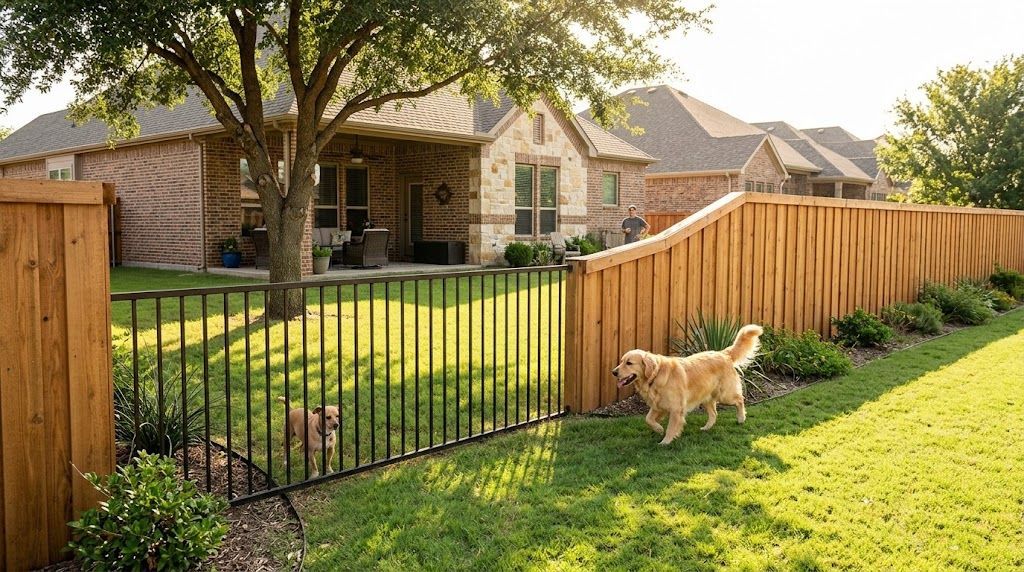
For example, a homeowner might use a taller privacy fence around the primary backyard while choosing a lower or more open design closer to a visibility-sensitive area, where permitted.
The goal is to create privacy where it provides the most benefit without unnecessarily obstructing important sightlines.
Wood Privacy Fencing for Corner Lots
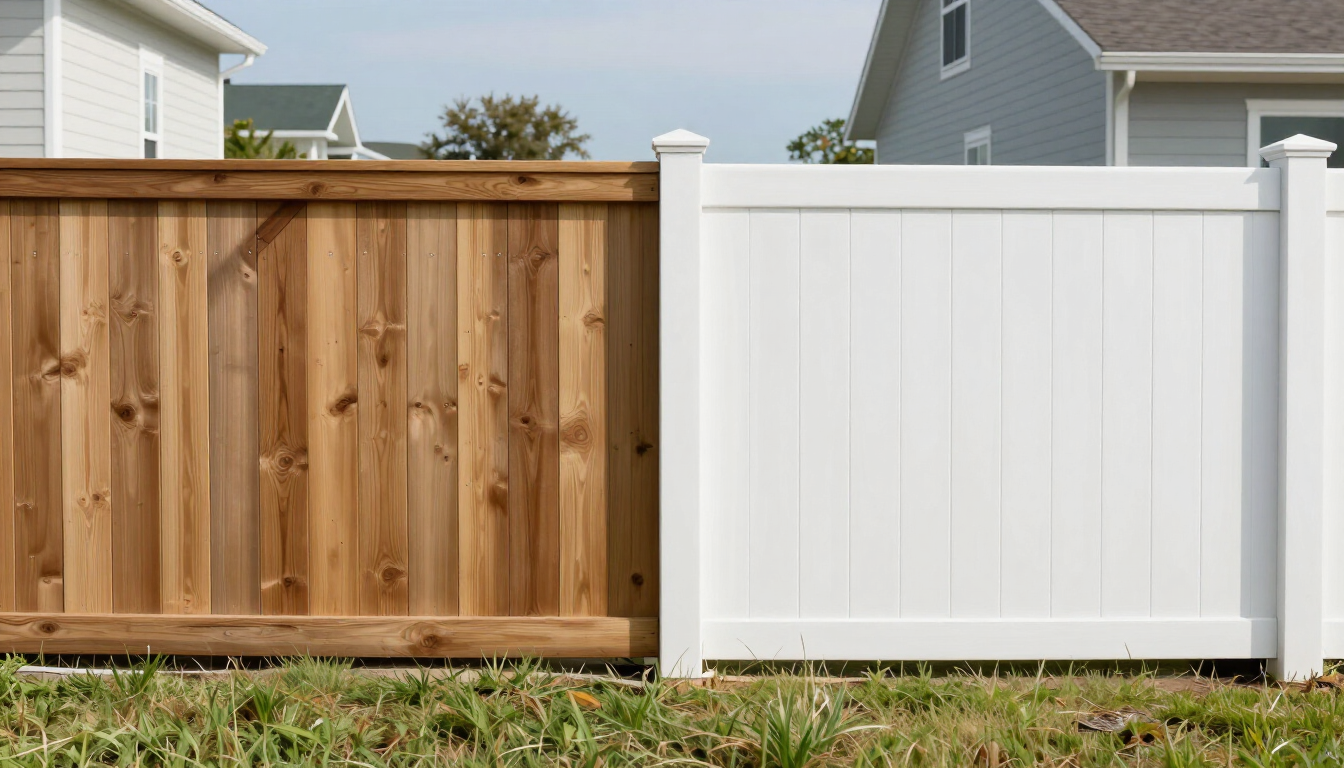
Wood privacy fencing is a popular choice for corner homes because it can dramatically reduce exposure from the street.
A backyard located beside a road can feel much more private once a solid wood fence separates the outdoor living area from passing traffic.
Wood also provides extensive design flexibility.
Depending on applicable rules, homeowners may be able to customize:
- Fence height
- Board arrangement
- Decorative tops
- Gate locations
- Stain or finish
- Transitions between fence sections
A wood privacy fence can work particularly well around patios, decks, pools, gardens, and children's play areas.
However, solid panels experience significant wind pressure. On exposed Gulf Coast corner properties, post installation and overall structural design deserve careful attention.
Is Vinyl a Good Choice for a Corner Property?
Vinyl can also provide excellent privacy and has the advantage of relatively low routine maintenance.
Solid vinyl panels block views from adjoining streets and neighboring properties while providing a clean, uniform appearance.
Vinyl does not require staining and is resistant to rot, which can make it appealing in the humid Texas Gulf Coast climate.
For corner-lot homeowners, the primary considerations include:
- Wind exposure
- Fence height
- Panel design
- Post installation
- Local restrictions
- Gate locations
As with any solid fence, vinyl should not simply be placed wherever maximum privacy is desired without considering visibility and property requirements.
A professional installer can evaluate how the fence will interact with the lot layout before construction begins.
When Does Chain Link Make Sense?
Chain link fencing can be an effective option when enclosure is more important than visual privacy.
Because chain link remains open, it allows visibility through the fence. This can be useful on larger corner properties or in areas where maintaining sightlines is desirable.
Chain link may be particularly suitable for:
- Pet containment
- Large side yards
- Utility areas
- Properties where privacy is not the main objective
- Budget-conscious fencing projects
A coated chain link system can also provide a less industrial appearance while maintaining the benefits of an open fence.
Some homeowners combine fence materials. For example, privacy fencing may surround the backyard while an open style is used elsewhere on the property.
The best combination depends on local requirements and how each portion of the yard is used.
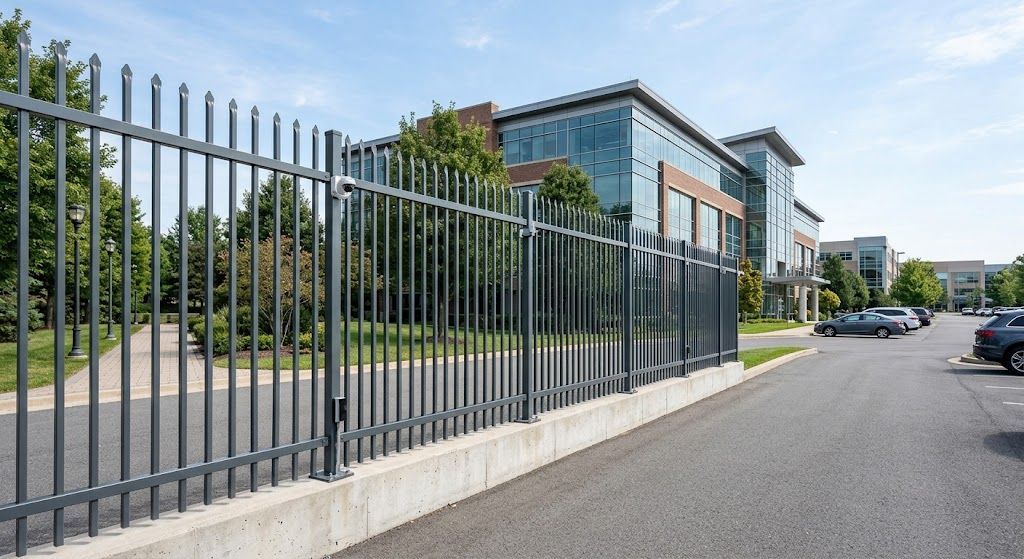
Aluminum Fencing Can Preserve an Open Appearance
Aluminum fencing is another option for corner properties where curb appeal and visibility are priorities.
An open aluminum fence establishes a clear boundary without creating the visual weight of a solid privacy wall.
This can complement:
- Landscaped front yards
- Traditional homes
- Modern properties
- Pool areas
- Decorative entrances
Because aluminum does not provide full visual privacy, it may not be ideal for homeowners whose primary concern is screening the backyard from street traffic.
However, it can work well as part of a mixed-material design.
For example, a property might use a wood or vinyl privacy fence around the backyard and transition to aluminum fencing in a more visible front or side section.
Think Carefully About Gate Placement
Gate placement is particularly important on a corner lot because homeowners may have multiple possible access points.
Before choosing locations, consider how people and equipment move around the property.
Questions to ask include:
- Where do family members usually enter the backyard?
- Does a lawn mower need access?
- Will contractors need to reach utilities or equipment?
- Is a wider gate needed for trailers or landscaping equipment?
- Would a gate near the driveway create better access?
- Could a gate opening interfere with a sidewalk?
The most convenient location on paper may not be the best location in everyday use.
Gates also need strong support. A gate that begins sagging can become difficult to latch and may create security or pet-containment problems.
Planning gate width, posts, hardware, and clearance at the beginning of the project can prevent frustrating modifications later.
Consider Noise and Street Activity
Corner lots often experience more activity than interior lots because two sides of the property may face public streets.
Homeowners may encounter:
- Vehicle traffic
- Pedestrians
- Bicycles
- Dogs being walked
- Delivery vehicles
- Neighborhood activity
A solid privacy fence can reduce visual exposure and make the backyard feel more secluded.
It is important, however, to have realistic expectations about noise. A standard residential privacy fence may influence how sound travels, but it should not be treated as a soundproof wall.
If street activity is the concern, combining fencing with thoughtful landscaping can help create a more comfortable visual environment.
Plan the Fence Around Your Outdoor Living Space
Instead of treating fencing as an isolated property-boundary project, consider how it will interact with the backyard.
A corner-lot fence can influence:
- Patio privacy
- Deck layout
- Pool areas
- Landscaping
- Outdoor kitchens
- Play spaces
- Pet areas
If you plan to add a deck or patio later, thinking about those improvements before fence installation can lead to a better overall layout.
For example, you may want the tallest permitted privacy section behind a patio while maintaining more open fencing in an area that does not require screening.
Gulf Coast Fence also works with decks, patios, gates, and multiple fence materials, making it possible to think about the outdoor space as a connected project rather than unrelated improvements.
[Residential Fencing and Outdoor Solutions – https://gulfcoastfence.com/]
How Gulf Coast Weather Should Influence Your Decision
Texas City, League City, Clear Lake, Kemah, Dickinson, and nearby communities experience conditions that can be demanding on outdoor structures.
A corner fence may be particularly exposed because it can lack the protection that nearby structures or neighboring fences provide.
Potential environmental stresses include:
- Strong winds
- Heavy rainfall
- High humidity
- Intense sunlight
- Tropical weather
- Coastal salt exposure
Fence posts are a critical part of the system. They transfer the loads placed on panels into the ground and help keep the fence aligned.
Solid privacy fences can experience more wind pressure than open styles because they present a larger continuous surface to the wind.
No residential fence should be described as hurricane-proof. Extreme storms can damage even a well-built fence. However, appropriate materials, sound installation, quality hardware, and routine maintenance can improve long-term performance under normal and severe Gulf Coast conditions.
Maintain Landscaping Around the Fence
Landscaping can enhance a corner fence, but vegetation should not be allowed to create maintenance problems.
Large shrubs, vines, and tree branches can:
- Trap moisture against wood
- Hide developing damage
- Push against panels
- Drop debris around posts
- Increase storm-related impact risk
Trees near the fence should also be monitored for dead or unstable limbs.
After a significant storm, inspect both the fence and nearby vegetation. A fence may appear structurally sound while a damaged tree branch remains positioned to fall later.
Maintaining some access to the fence line makes inspections and repairs easier.
Should You Fence the Entire Corner Lot?
Not necessarily.
The best fence layout depends on how you use the property.
Some homeowners primarily want to enclose the backyard for children or pets. Others want privacy along the street-facing side yard. Some may want a decorative boundary around a larger portion of the property.
Before deciding, identify your priorities:
- Privacy
- Security
- Pet containment
- Pool safety
- Curb appeal
- Property definition
Once you know the main purpose, you can determine which sections truly need fencing and which fence style is appropriate for each area.
This approach can produce a more attractive and functional result than simply enclosing every possible boundary with the same material and height.
Common Corner-Lot Fence Mistakes to Avoid
Several planning mistakes can make a corner-lot fence more complicated or expensive than necessary.
Assuming the property line. Always verify boundaries rather than relying on lawn edges or existing landscaping.
Ignoring sightlines. Privacy should not come at the expense of safe visibility near streets and driveways.
Checking HOA rules too late. Obtain required approvals before materials are ordered or construction begins.
Choosing material only by appearance. Maintenance, wind exposure, privacy, pets, and property conditions should also influence the decision.
Forgetting gates. Access needs should be planned before the fence layout is finalized.
Ignoring drainage. Water collecting around posts can contribute to long-term problems.
Good planning addresses these issues before installation starts.
Frequently Asked Questions About Corner-Lot Fencing
Can I install a privacy fence on a corner lot in Texas?
Often, yes, but the permitted height and location can depend on municipal requirements, visibility rules, easements, and HOA restrictions. Corner properties may have different requirements in street-facing areas, so verify the rules for your address before installation.
What is the best fence for a corner lot?
Wood and vinyl are strong options when privacy is the priority. Chain link and aluminum can be useful where visibility is more important. Many corner properties benefit from combining different fence styles according to how each area functions.
Can a corner fence block the view from my driveway?
A poorly positioned solid fence can reduce visibility. Driveway sightlines should be considered during the design stage so drivers can see pedestrians, bicycles, and approaching traffic as clearly as possible.
Is a corner-lot fence more expensive?
It can be, particularly if the property requires more linear footage than an interior lot or uses multiple materials and gates. The actual cost depends on fence length, material, height, terrain, gates, removal of existing fencing, and other site conditions.
Should I have my property surveyed before installing a fence?
If the boundaries are unclear, a current survey can be extremely useful. Correctly identifying the property line before construction can prevent disputes and costly relocation later.
Plan a Corner-Lot Fence Around Your Property
The best fence for a corner lot is one that provides privacy and security where you need them while respecting the unique visibility, access, and design challenges created by having two street-facing sides.
For some Texas homeowners, that may mean a wood privacy fence surrounding the backyard. Others may prefer low-maintenance vinyl or a combination of solid and open fencing. Chain link can provide economical enclosure, while aluminum can preserve visibility and complement landscaping.
Whatever material you choose, the details matter: property lines, fence height, gate placement, drainage, wind exposure, local regulations, and HOA requirements should all be considered before construction.
Gulf Coast Fence is a family-owned and operated fencing contractor based in Texas City, serving homeowners throughout Texas City, League City, Friendswood, Pasadena, La Porte, Deer Park, Clear Lake, Kemah, Dickinson, Santa Fe, Hitchcock, Tiki Island, and surrounding Gulf Coast communities.
If you're searching for a fence contractor near me to help plan fencing for a corner property, Gulf Coast Fence can help evaluate your layout and compare wood, vinyl, chain link, aluminum, gates, and other options.
Visit [Gulf Coast Fence – https://gulfcoastfence.com/] or contact the team at
(409) 795-0084 to discuss your project and request an estimate.
Recent Posts